ART NEWS
Timeless Writings in Print and Beyond
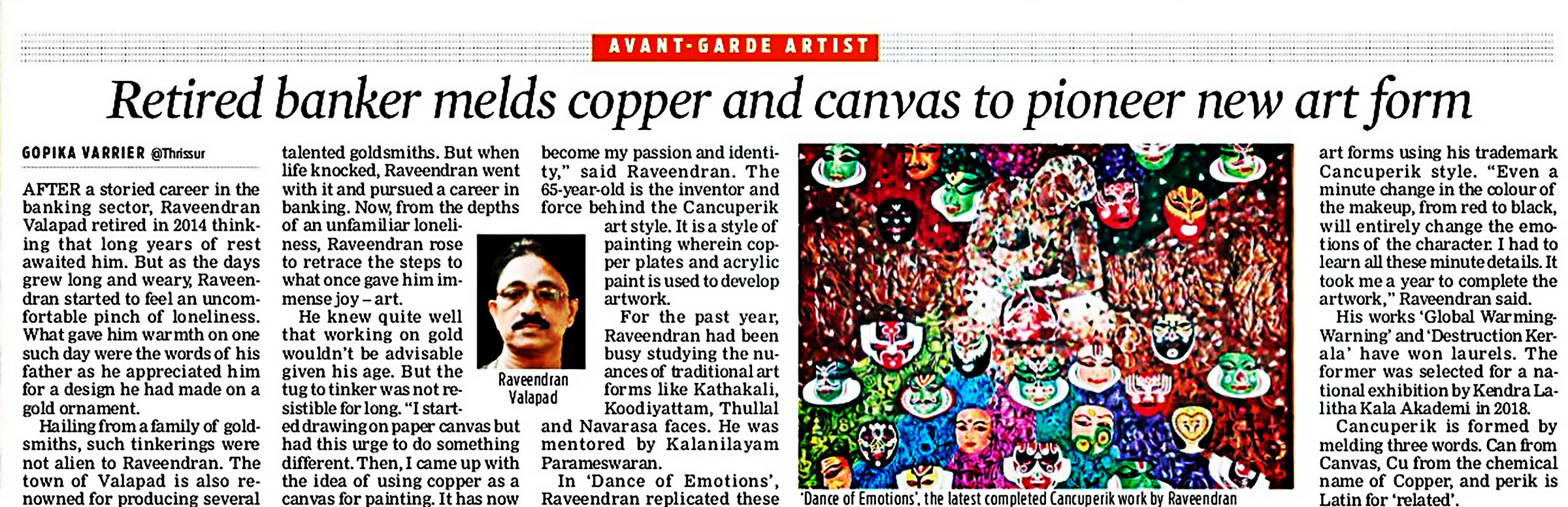
Though from ancient times onwards a variety of materials have been used to make tools, weapons and art pieces, the term Mixed Media became popular in art only in the 20th century when it started to describe a work made of a range of unconventional materials. Mixed Media concept was popularised mainly by the ‘Dadaistes” and the Surrealists to express their intellectualism connected with anarchism and freedom. Mixed Media became composite later to get itself transformed into Multi Media as the computer age became popular. The basic concept of Mixed Media is connected with the desire of the artists to amalgamate different mediums on the same art piece to get an enhanced vigour for visual language, concept and expression.
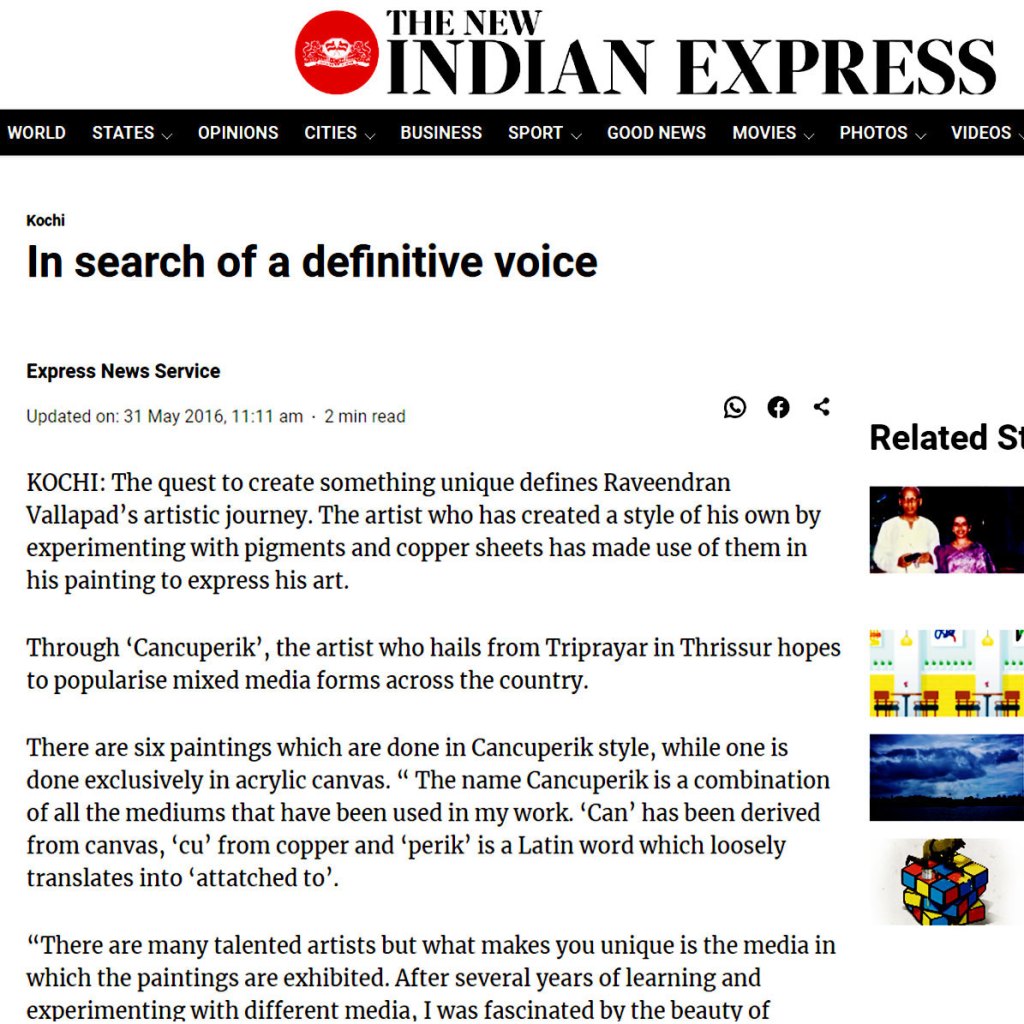
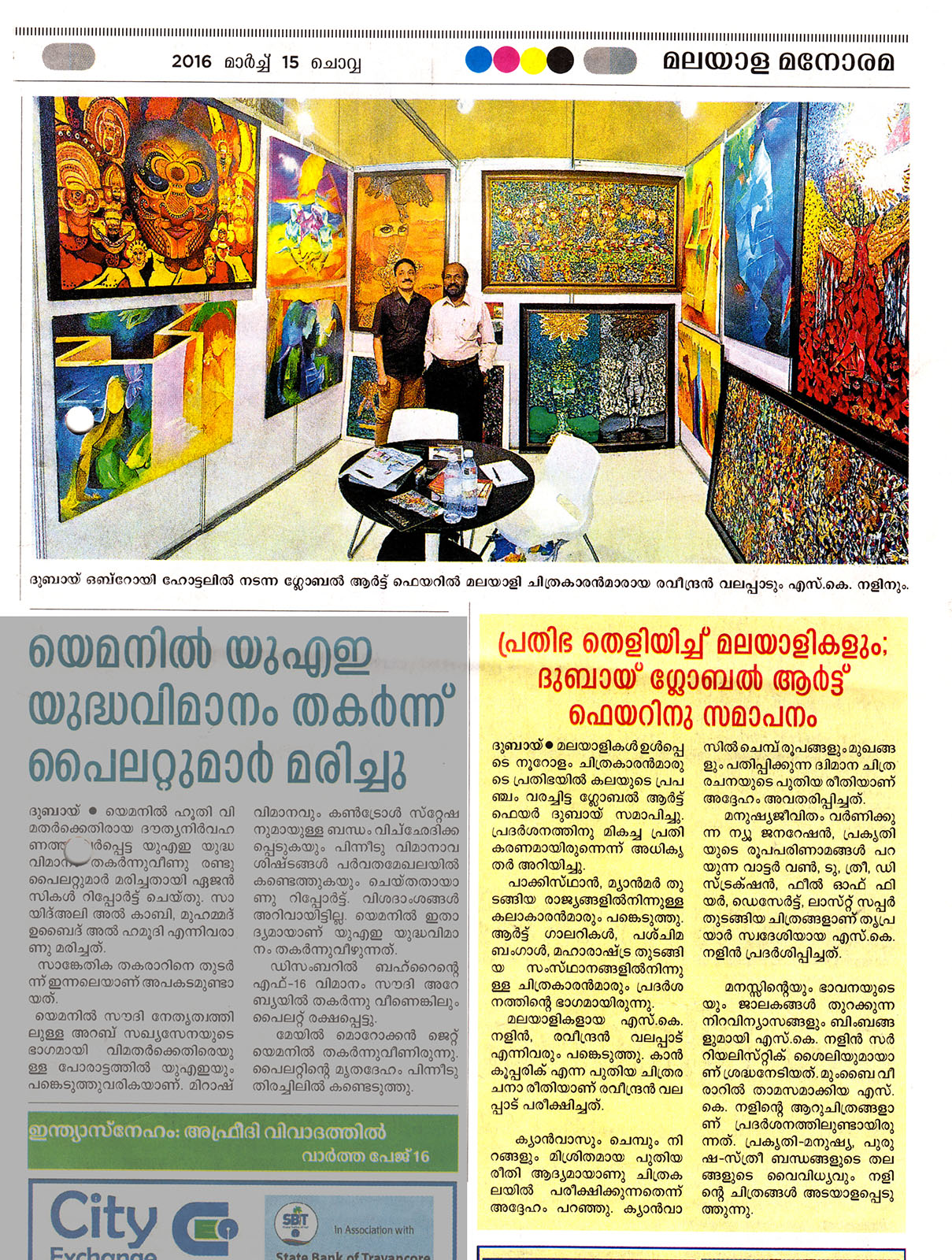
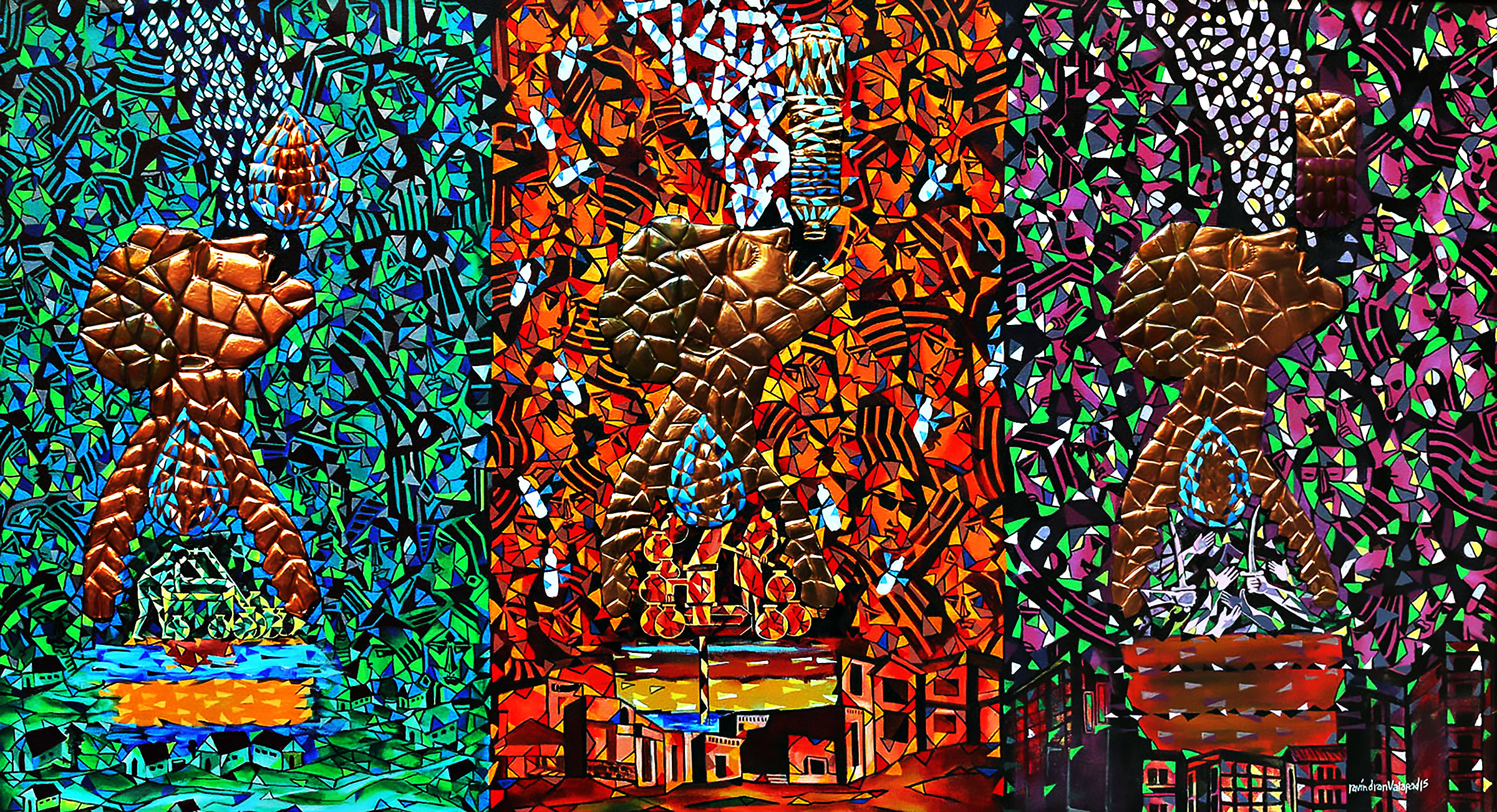
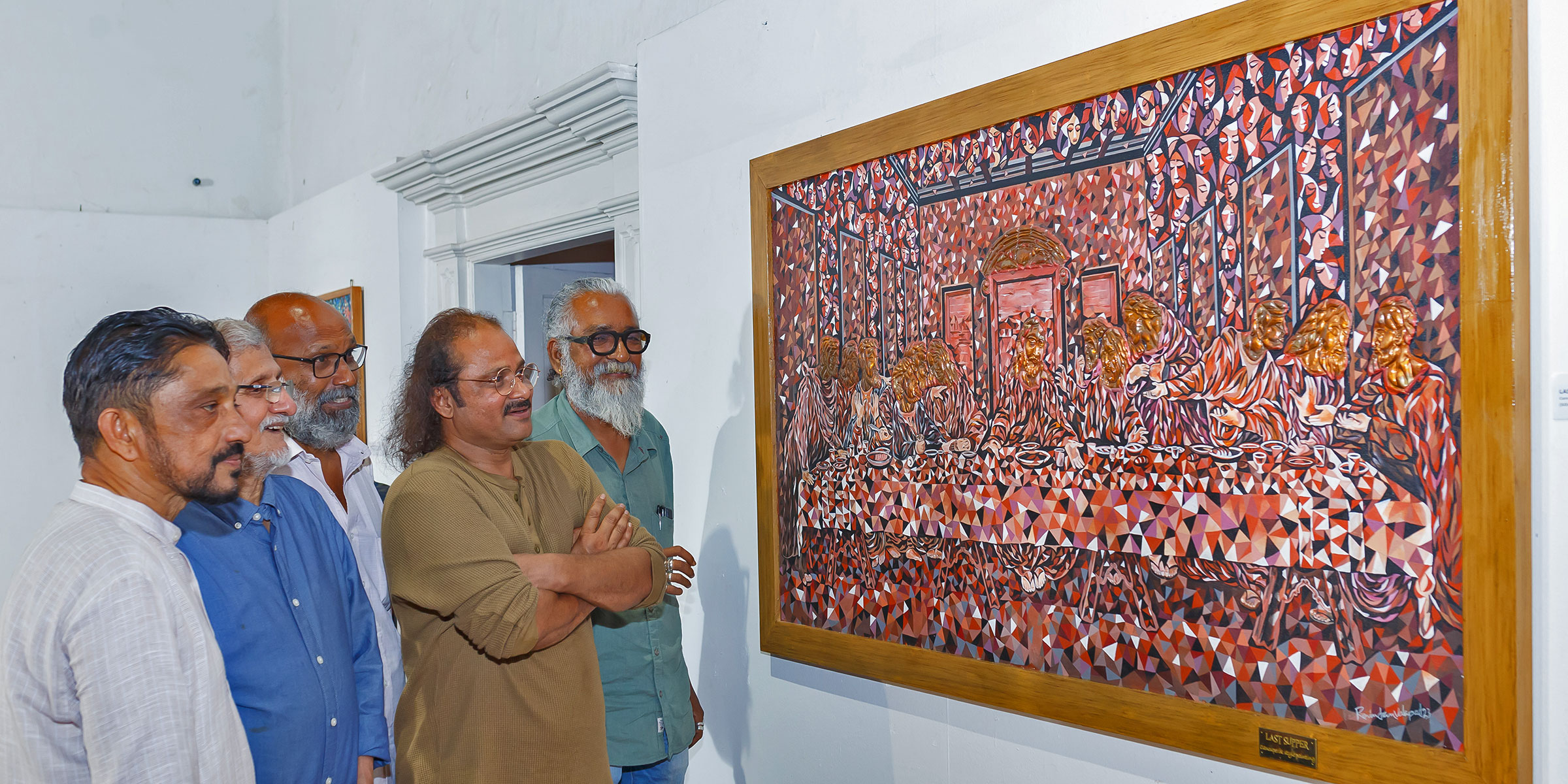
Raveendran Valapad, once a very active theatre artist now does experiments on canvas with pigments and copper sheets to create a new sensibility of crafting an art to show his technique in expressing various themes. He coined the term “CANCUPERIK” for his technique which could be decoded according to him as canvas (can) cupric for copper. Cutting the copper sheet of a specific gauge and making form on it by meticulously rubbing and pressing physically with specially made tools Raveendran Valapad showcases his mastery over the technique he has innovated. The shaped and articulated copper forms are heated up to different temperatures scientifically to get the copper “discoloured” to the expected colours and tones. With utmost care the copper forms are fixed on the canvas which is painted extensively in acrylic to create a sense of fullness. The two dimensional pictorial plane of the canvas painted in acrylic pigments gets a low relief effect because of the embossed copper forms.
All the canvas Raveendran Vala pad painted and embossed with copper forms create an apparent kinetic effect because of the intricate cubic segments of figures arranged across the whole pictorial surface in different hues. The primary, secondary and complimentary colours create squares, triangles, cubes and straight lines of very small size to make the shapes suitable for the pictorial narratives. Even within the total narrative space of the picture the artist creates smaller portions of micro narration as in the case of his work titled “New Generation” where each segment is packed with various micro aspects of human life from birth to death. “Water Water Everywhere …. another work has three parts showing the evolution of the decay of nature and frightening scarcity of the water in the near future where every one is afraid of the inevitable dreadful war for the possession of water sources. “Natural Consequences” is a work that depicts the slow change from green nature to its burned down conditions. “Hands of innocence” is the present reality of terrorism faced by the world and “Eyes of Desert” captures the atmosphere of a culture. “Last supper” has figures with different expressions embossed on copper sheets.
These works of art show the skill of Raveendran Valapad to make the canvas active with the themes he has selected. The language and content are in unison where skill enhances the expression of art.
Vijayakumar Menon (Late)
The Art Historian
അമൂർത്തതയിലെ രൂപനിർവചനം
ഡോ. ഷാജു നെല്ലായി
കല മൂർത്തവും അമൂർത്തവും ആകുന്നതിൻ്റെ കാരണത്തെയോ മനോവ്യാപാരങ്ങളെയോ വേർത്തിരിച്ചെടുക്കുക എന്നത് പ്രയാസകരമാണ്.
സങ്കീർണ്ണ വ്യവഹരങ്ങളാൽ നിർമ്മിതമാകുന്നതിനാൽത്തന്നെ സ്വാഭാവികമായും അക്കാര്യം ഒട്ടൊക്കെ നിഗൂഡവുമാണ്. അതിനെ അഴിച്ചെടുക്കുന്നതിലൂടെയോ അല്ലെങ്കിൽ വ്യാഖ്യാനം ചെയ്യുന്നതിലൂടെയോ മാത്രമേ സാമാന്യവല്ക്കരിക്കാനുവുള്ളൂ. അ പ്പോൾപ്പോലും മുഴുവനായും അത് സാരപ്പെട്ടു എന്ന് ഗണിക്കാനാവില്ല. രൂപപരമായെങ്കിലും ഒരുതരം അമൂർത്തരീതിയിലാണ് രവിന്ദ്രന് സഞ്ചരിക്കുന്നത്.
കലയിലെ ജ്യാമിതീയ രൂപനിർവചനം എന്നത് ത്രികോണങ്ങൾ, ചതുരങ്ങൾ, വ്യത്തങ്ങൾ, സ ങ്കീർണ്ണവരകൾ എന്നിവയാല് സംഭവിക്കുന്നതാണ്. രവിന്ദ്രൻ്റെ കല അതുപോലെയുള്ള ഗണിതരൂപങ്ങ ളെ ആശ്രയിക്കുന്നത് കേവലമായ സ്ഥല-ഇട(Space) ക്രമീകരണം എന്നതിനപ്പുറത്ത് വ്യാമിശ്രിതമായ മനോവ്യാപാരങ്ങളെക്കൂടി ആന്തരവൽക്കരിക്കാനാണ്. ഒരു പ്രമേയം/പ്രതിപാദ്യം വികസിപ്പിക്കുന്നതിന് കലാകാരന്മാർക്ക് ജ്യാമിതീയ സങ്കേതം ഉപയോഗിക്കാമെന്നിരിക്കെ പക്ഷേ, അതിനെ മറികടക്കേണ്ടത് കലയുടെ സമകാലികതയെ ഉൾക്കൊണ്ടുകൊണ്ടായിരിക്കണം എന്നുമാത്രം. ക്യൂബിസം പോലുള്ളവയില് അറിവ്/വിവരക്കണക്കുകളുടെ നൈപുണ്യത്തിനേക്കാൾ സുദ്യഡതമായ ചരിത്ര-സാമൂഹ്യാർത്ഥത്തിലുള്ള വിശകലനോപാദികൂടിയാകുമ്പോഴാണ് അത് അർത്ഥവത്താകുന്നത്. അതായത്, അത് വികസിപ്പിക്കുന്ന താകട്ടെ സമകാലീനമായ ജാഗ്രതാക്കണ്ണുകൊണ്ടുമായിരിക്കണം.
ചിലയിടത്ത് അടിസ്ഥാനവർണ്ണക്കൂട്ടുകള് സ്വാഭാവിമാർന്ന ദൃശ്യപ്പൊലിമയുണ്ടാക്കുമ്പോള് ചില തിൽ ആകെയുമുള്ള ഏകനിറംകൊണ്ടാണത് സുസാധ്യമാക്കുന്നത്. ചിത്രത്തിൽ ആലേഖനത്തിന്റെ/പരിക ല്പനയുടെ സ്വഭാവവിശേഷത്തില് ഒരു ഏകതാനത സൂക്ഷിക്കുന്നത് ശൈലീപരമായ ക്ലിഷ്ടതയ്ക്കാണെ ന്ന് തീർത്തുപറയാനുമാവില്ല. പ്രകൃതിയും മനുഷ്യരും എല്ലാമടങ്ങുന്ന സമ്മിശ്രതയില് ഒരു ലയരൂപ തയ്ക്ക് അത് അത്യന്താപേക്ഷിതമാണ് എന്നൊരു ധ്വനിയുണ്ടാക്കുകയാണ് ഇവിടെ കലാകാരന് ഡിസൈൻ എന്നത് കലാരൂപത്തിൻ്റെ ആദ്യപ്രക്രിയയല്ല. വസ്തുക്കളെയും അനുഭവങ്ങളെ യും ഒരേമാതിരിയുള്ള പ്രാധാന്യത്തോടെ ഉൾക്കൊള്ളുന്നതിനായി വികസിപ്പിച്ചെടുത്ത ഒരുതരം ആ വിഷ്കാരരീതിയാണ്. എല്ലാ കലാരൂപസങ്കേതങ്ങളെയുംപോലെ രൂപകൽപ്പനയ്ക്കും പ്രശ്നപരിഹാര ത്തിനുള്ള അഥവാ ആഴമുള്ള കാര്യങ്ങളെ പ്രതിനിധീകരിക്കാനുള്ള കഴിവുണ്ടെന്നു തിരിച്ചറിഞ്ഞ ഒരു കലാകാരന്റെ സാമീപ്യം. ഒപ്പം, രൂപകൽപ്പനാപരമായ രവിന്ദ്രൻ കല വൈവിധ്യങ്ങളായ ലക്ഷ്യങ്ങള് നിറവേറ്റുന്നുണ്ട്. അതിൽ ആദ്യത്തേത് സൗന്ദര്യാത്മകമായ ആകർഷണംതന്നെയാണ്. ശേഷം അത് ബിം ബങ്ങളെ/വസ്തുക്കളെ ദൃശ്യപരമായി ആർക്കും ഇടപഴകാവുന്നതും വൈകാരികമായി അനുരണനം ചെയ്യാവുന്നതുമായ ഒന്നാക്കിമാറ്റുന്നു. ഡിസൈനിലെ കലാപരമായ ഘടകങ്ങൾ വൈകാരികഭാവത്തെ ഉണർത്തുകയും സാന്ദർഭികമായ സന്ദേശങ്ങൾ കൈമാറുകയും ചെയ്യുന്നുണ്ട്.
Defining Shapes in the Realm of Abstraction: An Exploration of Form and Meaning
Dr. Shaju Nellai
Navigating the complex landscape of concrete and abstract art, the underlying logic or mentality that defines these fields cannot easily be separated. Inherent in multifaceted processes, art maintains an aura of mystery that defies understanding. It can be tentatively generalized through reconstruction or interpretation, yet its essence remains elusive. Raveendran navigates this mysterious territory with a distinctly abstract yet figurative approach.
Geometric shapes—triangles, squares, diagonals, complex lines—feature prominently in Raveendran’s art, transcending mere spatial configuration to delve into deeper psychological dialogues. These mathematical constructs are not simply themes, but vehicles for conveying complex emotional and cognitive experiences. Although geometric techniques can scaffold an artistic theme or expression, their true potential is realized when combined with a contemporary sensibility, transcending historical boundaries such as Cubism, which often serves as a lens for socio-historical critique rather than pure technical mastery. Therefore, contemporary art needs a cautious and innovative perspective.
In some cases, the combination of primary colors achieves a seamless visual harmony, while in others, the artist uses a bold monochromatic scheme. Consistency in the handling of inscriptions or signs within the image should not be mistaken for mere stylistic sophistication. Instead, Raveendran creates a resonant soundscape within his art, capturing the symbiotic relationship between nature and humanity.
Design, though not the primary driver of art, emerges as an important aspect of Raveendran’s work, evolving to give equal importance to objects and experiences. This proximity to an artist who understands design as a means of confronting problems or embodying profound ideas is critical to all art forms. Raveendran’s designs serve multiple purposes, chief among them being aesthetic appeal. Beyond this, they make the mundane visually compelling and emotionally intense, making them relatable at a fundamental level. The artistic elements woven into his designs evoke deep emotions, convey layered contextual messages, and create a rich record of meaning that resonates with the viewer.
 Artist Portfolio